


Angry Smash
4.91.07K Reviews
App Specs
- Version
- 1.9.1
- Updated On
- License
- Free
- Downloads
- 500,000+
- Developer
- Tripledot Studios Limited
- Categories
- Casual
- Platform
- Android
Screenshots

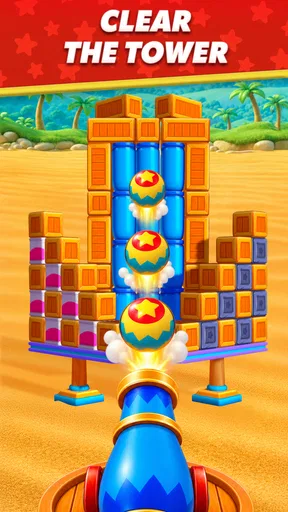



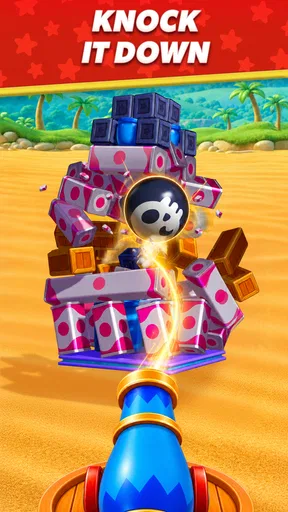

 Analysis by AppCompare
I like casual games that make sense before I have time to get comfortable on the sofa, and Angry Smash is built around that sort of quick understanding: aim a cannon, break through obstacles, and work toward clearing each level. That simple premise gives it an immediate appeal, but it also puts the focus on whether each shot feels satisfying and whether the challenge stays enjoyable once the basic idea is familiar. My overall impression is that this is best approached as a short-session game, not as a deep strategy title or a replacement for a more involved adventure.
Made by Tripledot Studios Limited, Angry Smash sits squarely in the casual-game space. Its presentation invites you to pick it up without needing to learn a complicated rulebook, while the cannon-and-obstacle setup gives each level a clear goal. The game is free to download and rated for Everyone, which makes it easy to consider for a broad audience. It has a 4.9 average from around 34,000 ratings, though that number alone cannot tell you whether its particular style will suit your taste.
Quick play, with a clear reason to keep aiming
I find the appeal here starts with how quickly the goal makes sense: take a shot, see what changes, and decide what to try next. In this section, I’ll focus on why that pace works for short breaks and how a little patience can make each attempt more satisfying. That also sets up the practical question of how the game fits into a busy day.
What the pace is likely to suit
The basic loop is easy to grasp: fire, watch what happens, and decide how to tackle the next obstacle. That makes Angry Smash a natural choice for the small gaps in a day—waiting for a meal, taking a short break, or winding down when you do not want to follow a long story. You can understand the objective quickly, which is a real advantage when you only have a few minutes and do not want to spend them navigating menus or learning a complex system.
The appealing part of a cannon game is the connection between a deliberate action and a visible result. Rather than tapping through a purely abstract puzzle, you are trying to make a shot that changes the situation on screen. I find that kind of feedback can make even a modest level feel engaging: you can watch the obstacle respond and adjust your approach rather than simply repeating a button press without context. The most satisfying moments should come when a shot clears the way efficiently, not merely when you fire as quickly as possible.
There is a trade-off, though. A straightforward goal is welcoming, but it can also mean the game depends heavily on variety in its obstacles and how the levels ask you to use the cannon. If you want elaborate character development, a large world to explore, or a long-term competitive ladder, this is probably not the right kind of game. Its appeal is concentrated in the immediate act of aiming and smashing, so your enjoyment will depend on how much you like repeating that central activity.
How to get more from each attempt
A useful way to approach a tricky level is to treat the first shot as information rather than as a final answer. Notice which part of the obstacle gives way and whether your next move should focus on opening a path or clearing a remaining obstruction. That small change in mindset can make the game feel less like blind firing. It also helps you avoid the common casual-game habit of tapping rapidly just because the controls seem simple.
Worth Reading Before You Choose

Flipboard Shows What News Apps Must Do Beyond the Feed

Switching to Android Auto Means Rethinking Your Driving Routine

Google Calendar Makes a Crowded Week Easier to Manage

Ludo King Makes the Most of the Minutes Between Plans

Baby Panda World Brings Quick Play to Modern Phones, but Its Game Library Feels Busy

ESPN’s Live Game View Makes Following Close Games Easier
When you have only a brief break, it is worth playing one level with attention instead of trying to rush through several. A cannon-based challenge rewards a moment of observation: identify what is in the way, make a considered attempt, then see what the result teaches you. This is a practical advantage over some match-style casual games, where the rhythm can encourage rapid chains of moves and make it easy to keep playing without pausing. Here, the shot itself gives you a natural point to stop and decide whether you want another round.
For younger players or anyone sharing a device, the Everyone age rating makes the game approachable as a general-audience option. I would still suggest an adult check the purchase settings before handing a phone over, because optional in-app purchases are available. Those purchases range from $0.99 to $99.99 per item, so the free starting point should not be confused with a promise that every optional item is free. If you prefer to avoid spending, decide on that boundary in advance rather than making a purchase in the middle of a session.
Busy moments and the limits of a quick session
Angry Smash is an easy fit for a commute pause or a coffee break because its central action does not demand the kind of sustained attention that a story-heavy game might. A realistic use case is waiting for a friend who is a few minutes late: you can open the game, focus on a level, and put it away when they arrive. I would not choose it while walking, cycling, or doing anything that needs your attention elsewhere; the aiming-and-response loop is more enjoyable when you can actually watch what happens after a shot.
It may also work well for someone who wants a low-pressure alternative to competitive mobile games. There is no need to treat each session as a test of reflexes or to coordinate with other players based on the information available here. That makes the game easier to dip into on your own terms. On the other hand, if your favorite part of casual games is competing against friends, collecting elaborate upgrades, or building a long progression plan, you may find the core premise too narrow.
One practical trade-off is that short-session games can make it tempting to keep going after a level goes well—or after one does not. I recommend deciding whether you have time for another attempt before opening it, especially when you are using it as a quick break. The simple loop is convenient precisely because it is easy to return to, but that does not mean it will suit someone who wants a firm endpoint or a more varied activity every few minutes.
Reliability, device fit, and what to expect
I would set expectations around the kind of experience this game promises rather than assume it is designed for demanding hardware. Its premise is visually direct and centered on firing at obstacles, which sounds more modest than a large 3D action game. Still, without treating that as a guarantee about frame rate, loading time, battery use, or heat, the sensible approach is to try it on your own device and see how it behaves in your normal routine. Performance can vary with the phone or tablet, its available storage, and what else is running.
The listed minimum operating-system requirement is 7.1, so the game is intended to support devices at that threshold and newer compatible versions. That does not mean every older device will feel equally responsive, nor does it tell you how much space the current installation needs. If your phone is already low on storage or tends to struggle with games, check that it has room and close other demanding apps before deciding that a slowdown is the game’s fault. These are simple steps, but they can make a fair test less frustrating.
For reliability, I would judge the experience by whether it returns you to play smoothly after interruptions, not by assuming that every session will be uninterrupted. A call, a switch to another app, or a low-battery warning can interrupt any mobile game. If you are playing while waiting for something important, keep the session casual and avoid relying on it to preserve a long, delicate sequence. The level-based, self-contained nature suggested by its premise is a better match for brief use than for a single extended run that you cannot pause.
The current version is 1.9.1. That gives you a useful version reference when checking compatibility or comparing what is installed on your device, but a version number by itself is not a promise about performance on every model. If the game feels sluggish, first try a fresh launch and make sure the operating system is supported. If the problem persists, your device’s age and background load may matter as much as the game itself.
How it compares with other casual games
Compared with familiar match-three games, Angry Smash puts more emphasis on a shot and its effect on physical-looking obstacles than on swapping tiles into patterns. That gives it a more direct, action-oriented feel. Compared with endless runners, it is less about maintaining a rapid stream of movement and more about choosing when and where to fire. Those differences make it a useful change of pace if you are tired of matching colors or reacting to a constantly advancing screen.
The exchange is variety. A match game can offer a broad range of board layouts and combinations, while a runner can keep changing the challenge through speed and hazards. Angry Smash has a more focused identity, so it needs the cannon-and-obstacle interaction to remain engaging for you. If that interaction clicks, the focused design is a strength: you know what you are here to do. If you quickly tire of repeating a central mechanic, another casual game with several distinct modes may be a better use of your time.
It is also worth considering what you want from a free game. Angry Smash can be tried without paying, but in-app purchases are part of the experience’s commercial setup. I would begin with the free play and judge whether the moment-to-moment action is enough on its own before spending anything. The presence of purchase options does not automatically make a game unsuitable, but the broad price range means it is wise to be deliberate, particularly if children use the device or purchases are connected to a shared account.
Who should install it—and who should move on
I would recommend giving Angry Smash a try if you want an uncomplicated casual game that can fill a short pause, and if the idea of aiming a cannon at obstacles sounds more appealing than matching symbols or steering through an endless course. Its 500,000-plus installs suggest that it has reached a sizable audience, while the number of ratings and reviews indicates that many players have taken time to respond. Those figures are useful context, not a substitute for trying the specific play style yourself.
I would skip it if you are looking for a deep campaign, a broad collection of different activities, or a game whose main attraction is social competition. I would also look elsewhere if you dislike purchase prompts or prefer games with no optional spending at all. The free entry point is convenient, but anyone who wants a completely purchase-free household experience should check device-level purchase controls before installing.
For a first session, I suggest playing when you have enough attention to watch how each shot affects the obstacles, rather than tapping through while distracted. That gives you a better sense of whether the central mechanic has satisfying feedback for you. If it does, the game can be an easy companion for short breaks; if it does not, the simple premise may feel repetitive rather than relaxing. That distinction matters more than its popularity when deciding whether it belongs on your home screen.
My performance verdict
Angry Smash has a clear, approachable hook and a sensible place among quick casual games: it asks you to aim, make a change on screen, and tackle the next obstacle. I appreciate that this is easy to understand without turning into a complicated commitment. Its best use is a short, focused session when you want a small burst of interactive play, and its main limitation is that the central action may not provide enough variety for players who expect a broader game.
Tripledot Studios Limited’s game is free to start, intended for Everyone, and currently at version 1.9.1, with optional purchases available. I would try it if you enjoy cannon-based obstacle challenges, but I would not choose it for a device-stressing spectacle or a substantial long-form experience. My recommendation is to treat it as a quick, focused diversion and judge the feel of its shots on your own device before deciding whether to keep it. That is the fairest way to assess both its performance and its appeal: enjoy the simple loop if it suits you, and move on without guilt if you need more depth.
Pros
- Quick rounds make it easy to play in short breaks.
- Simple controls are approachable for new players.
- Smashing objects gives the gameplay an immediate sense of impact.
- The arcade-style format encourages repeat attempts to improve.
- A lighthearted premise keeps the action easygoing.
Cons
- Gameplay may feel repetitive after extended sessions.
- The simple mechanics may not satisfy players seeking depth.
- Difficulty or challenge may vary little between stages.
- Frequent retries can become frustrating if progress is slow.
- Ads or in-app purchases may interrupt the experience.
FAQs for Angry Smash
What is Angry Smash, and what do you do in the game?
Angry Smash is an arcade-style game built around quick, action-focused play. You take on the role of a character who smashes through obstacles and targets, aiming to progress through stages and earn rewards. The exact mechanics and available modes can vary by version, so check the game’s store listing and in-game instructions before downloading to confirm what is included.
Is Angry Smash free to download, and does it include in-app purchases?
Angry Smash may be offered as a free download, but the price and monetization options can differ between the Android and iOS versions and may change over time. Some editions of mobile games include advertisements, optional purchases, or both. Review the current store listing for pricing and purchase details, and check your device’s purchase settings if you want to prevent accidental spending.
Can I play Angry Smash offline?
Offline availability depends on how the particular version of Angry Smash is designed. Core stages may work without an internet connection, while features such as advertisements, cloud saves, leaderboards, events, or rewards might require connectivity. If offline play matters to you, check the game description and test its main modes after installation. Also consider that an initial download or update will usually require internet access.
Which devices are compatible with Angry Smash?
Compatibility depends on the version available in your region and the requirements set by its publisher. Before downloading, confirm that the store page lists your device and operating-system version as supported, and make sure you have enough free storage for the game and any updates. Performance can also vary between devices, particularly on older hardware, so check recent user feedback if you are unsure.
Is Angry Smash suitable for children, and what should parents check?
Suitability depends on the game’s content, advertising, and purchase options, so parents should check the age rating and content descriptors on the relevant app store before installing it. If the version contains ads or in-app purchases, use parental controls to limit exposure and spending. It is also sensible to review the requested permissions and privacy information, especially when a child will be playing.


